Carbon Monoxide Claims Against HVAC Contractors: Combustion Venting, Heat Exchanger Failures, Liability Limits, and Defense Costs
See How We're Different
or call us: 888-862-1202
A homeowner wakes up with a pounding headache, the family dog is lethargic, and the CO alarm in the hallway is chirping. Three weeks earlier, your technician performed a furnace tune-up at that address. Within days, an attorney sends a preservation letter asking you to keep every invoice, photo, and service note tied to that job.
That is how carbon monoxide claims against HVAC contractors usually begin. They rarely arrive as a clean, single-issue complaint. They combine allegations about venting, heat exchangers, inspection scope, and technician training, and they move fast once a family has been hospitalized.
The financial stakes are high and still rising. A single exposure event can implicate your
general liability policy, your umbrella, your professional coverage, and your company's long-term reputation all at once. Your goal is to understand where these claims originate, which policy language decides whether you are covered, and how defense spending can drain your limits before a jury ever hears the case.
The Rising Risk of Carbon Monoxide Claims for HVAC Professionals
CO exposure claims are no longer treated as routine bodily injury files. Plaintiff attorneys now frame them as preventable, invisible harm caused by a licensed professional who "should have known." That framing plays well with juries and pushes settlement values upward.
The market has noticed. Commercial contracts are moving away from the familiar $1 million per occurrence and $2 million aggregate structure, and general contractors and property owners now frequently require umbrella or excess limits of $5 million to $10 million to guard against nuclear verdicts. If your bid paperwork still lists only primary GL limits, you may be losing work before you ever compete on price.
Real outcomes show why. In one Georgia wrongful death case, a contractor faced a $10 million settlement after leaving a job unfinished and activating gas service without verifying system integrity. The failure was procedural, not exotic. A technician turned on gas to equipment that had not been confirmed safe.
Several factors drive the trend:
- Tighter building envelopes: Modern homes trap combustion gases that older, leakier homes once diluted.
- Equipment changeouts: Replacing an 80% furnace with a high-efficiency unit can orphan a water heater on an oversized chimney.
- Alarm prevalence: More CO detectors mean more documented exposure events and clearer timelines for plaintiffs.
- Medical documentation: Carboxyhemoglobin readings from the ER give attorneys objective evidence of harm.
Here's what that means for you: every combustion appliance you touch creates a potential completed operations exposure. The claim may surface months after your invoice is paid, which is why
completed operations coverage matters as much as anything you carry.
Common Mechanical Failure Points in CO Litigationc
Most CO lawsuits rest on a short list of mechanical failures. Plaintiff experts will inspect the equipment, test draft, and look for evidence that your technician missed something visible or measurable. Knowing these failure points helps you train crews and defend claims.
Cracked Heat Exchangers and Material Fatigue
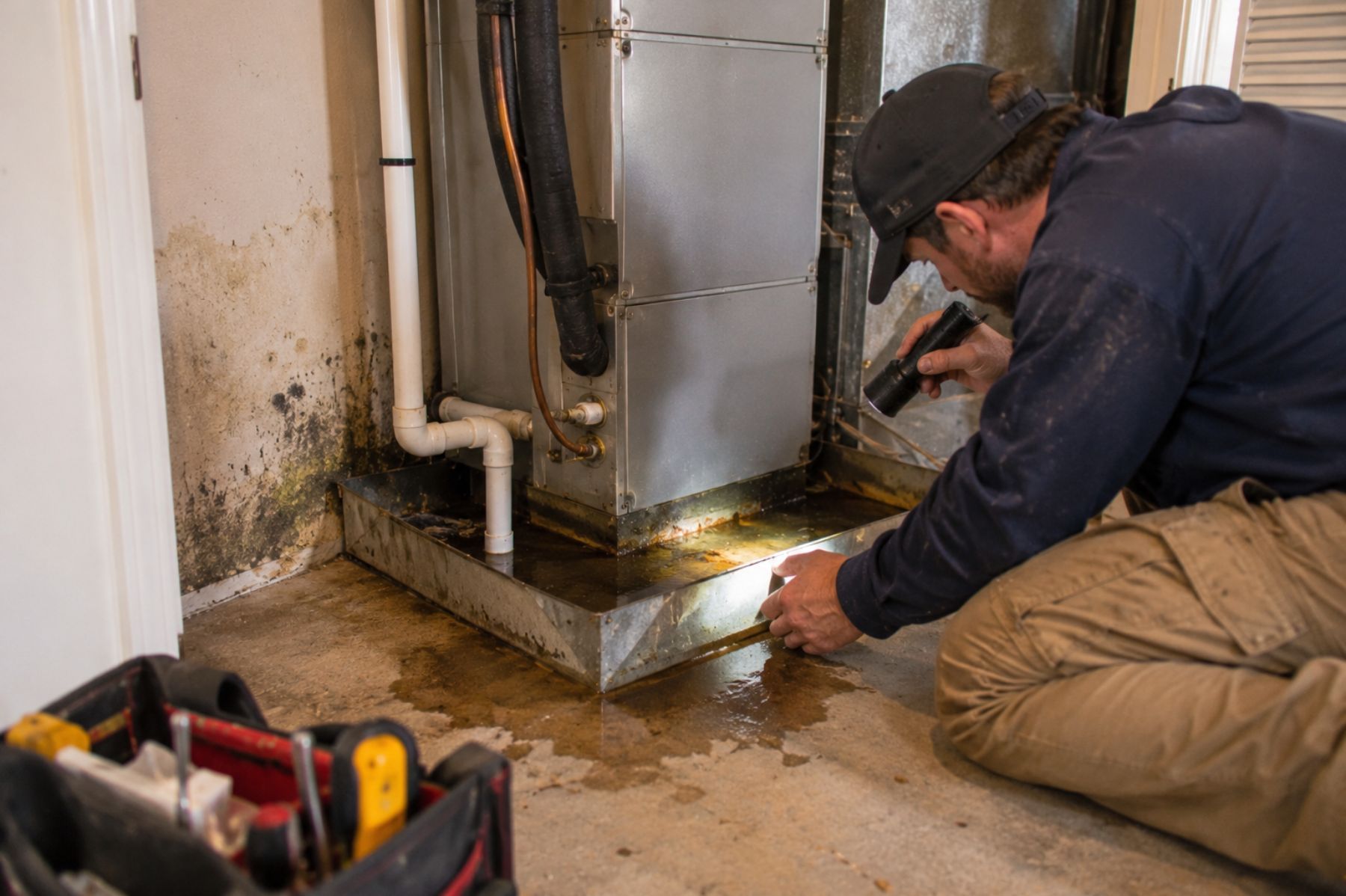
Heat exchangers fail through repeated thermal expansion and contraction. Each heating cycle stresses the metal, and over years that fatigue produces cracks, often near welds, crimped seams, or bends in clamshell and tubular designs. Overheating from restricted airflow, such as a clogged filter, undersized return, or failed blower motor, accelerates the damage.
The litigation problem is that cracks are not always visible. A hairline fracture may only open under heat, and some exchangers cannot be fully inspected without disassembly. Plaintiff experts often argue that your technician should have performed a combustion analysis, checked for flame rollout or flame disturbance when the blower engaged, or noted elevated CO in the flue.
Common allegations in heat exchanger cases include:
- Failing to perform a visual or camera inspection during a maintenance visit
- Ignoring high temperature rise readings that point to airflow restriction
- Not testing CO levels in flue gas and at supply registers
- Leaving a unit operating after noting rust, scale, or soot near burners
- Missing a tripped high limit switch history logged on the control board
Your best defense is a written record. If your technician documented a scope limitation, such as "heat exchanger not fully visible without disassembly, recommend full inspection," that one line can reshape the case. Without it, you are arguing about what a technician probably saw.
Improper Combustion Venting and Backdrafting Issues
Venting errors produce some of the most serious CO events because they can affect the entire house. Typical failures include improper vent pitch, disconnected or unsealed joints, wrong vent material for a condensing appliance, and undersized or oversized chimney liners. Common venting a new furnace with an existing water heater without recalculating vent sizing is a frequent source of claims.
Backdrafting happens when the house pulls combustion gases down the flue instead of letting them rise. Exhaust fans, clothes dryers, fireplaces, and tight construction all create negative pressure. A technician who installs equipment without a worst-case depressurization test may never see the problem, but a plaintiff's expert will recreate it on the first inspection.
Other venting defects that show up in claims:
- PVC intake and exhaust terminations placed too close together, causing recirculation
- Terminations blocked by snow, landscaping, or later additions
- Condensate draining back into a flue and corroding metal vent sections
- Missing or failed draft inducer pressure switch readings
The catch is that you can be blamed for conditions you did not create. If you serviced a furnace and failed to flag a visibly separated vent connector on the water heater beside it, a jury may decide your duty extended to that hazard.
Navigating Liability Limits and Policy Exclusions
Carrying insurance is not the same as being covered. CO claims expose two weak points in many HVAC programs: limits that are too low for modern verdicts, and exclusions that may remove coverage entirely.
The Impact of Pollution and Fungi/Bacteria Exclusions
Standard GL policies often contain a pollution exclusion, and carriers have argued that it may apply to carbon monoxide leaks. Courts have split on whether CO from a malfunctioning furnace counts as a "pollutant" in the traditional sense. You do not want to be the test case in your state.
This is why many HVAC contractors seek a specific pollution endorsement or a contractors pollution liability policy. Some carriers offer a "hostile fire" or "building heating equipment" carve-back that restores coverage for CO released from heating equipment. Read the exact wording. A carve-back that covers only equipment "at premises you own or rent" protects your shop, not your customers' homes.
Fungi and bacteria exclusions matter too. A venting failure that causes condensation can create mold growth, and a plaintiff may plead mold-related injuries alongside CO exposure. If your policy excludes fungi entirely, part of the claim could be uninsured while the rest is defended.
One thing to keep in mind: exclusions are often added at renewal with little notice. Ask your broker to compare forms year over year, not just premiums.
Professional Liability vs. General Liability Coverage
General liability responds to bodily injury and property damage caused by an occurrence. It is your primary defense for a CO poisoning claim tied to installation or repair work. Professional liability, or E&O, responds to errors in advice, design, or specification.
The overlap gets complicated in CO cases. If your company sizes duct systems, designs venting layouts, performs energy audits, or prepares load calculations, a plaintiff may allege a design error rather than a workmanship error. Many GL policies exclude professional services. Without E&O, a claim framed as faulty design could fall into a gap.
Contractors who offer design-build services, commissioning, or written combustion safety reports should treat E&O as essential. That said, E&O alone will not cover physical injury from defective installation, so you need both lines working together.
Comparing Coverage Needs for HVAC Contractors
Coverage decisions should follow the work you perform, not a template. A residential service company running tune-ups has a different exposure than a commercial contractor designing rooftop unit replacements for a school district. The table below shows how the main coverage lines respond to CO-related risk.
| Coverage Type | What It Responds To | CO Claim Relevance | Common Gap |
|---|---|---|---|
| General Liability | Bodily injury, property damage | Primary response to poisoning claims | Pollution exclusion |
| Completed Operations | Injury after job is finished | Covers CO events weeks or months later | Lower aggregate limits |
| Umbrella / Excess | Losses above primary limits | Protects against nuclear verdicts | Follow-form exclusions carry over |
| Professional Liability (E&O) | Design, advice, specification errors | Venting design, load calculations | Excludes physical workmanship |
| Contractors Pollution | Pollutant release | Fills CO and mold gaps | Often claims-made with retro dates |
| Workers' Compensation | Employee injuries | Technicians exposed on the job | Does not cover customers |
For budgeting, a typical HVAC contractor with five employees and two trucks should plan on roughly $8,000 to $15,000 annually for a comprehensive program. Umbrella limits and pollution coverage push you toward the higher end, especially if you take commercial work.
Workers' compensation affects your marketability as well. An Experience Modification Rate above 1.0 signals worse-than-average loss history, and many commercial bids screen out contractors above that threshold. If you plan to sell your business, buyers will review your EMR and loss runs closely. A clean record with adequate limits makes your company easier to value and easier to finance.
Completed operations deserves its own attention. HVAC claims frequently surface after the job closes, whether from a CO event, a refrigerant leak at a brazed joint, or condensate drainage that rots a ceiling. Confirm that your completed operations aggregate is adequate and that your policy does not shorten the coverage period.
Managing Defense Costs and Legal Strategy
Defense spending is now a major driver of claim severity. In a 2026 survey, 93% of insurers identified rising defense costs as a primary factor pushing professional liability severity higher. Those findings come from design and engineering lines, but HVAC contractors who provide design services face the same pressure.
Even winning costs money. Approximately 32% of professional liability claims now close with expenses only, meaning no indemnity payment, yet those files still cost tens of thousands of dollars to defend. Market observers note that these claims are becoming more expensive to resolve as legal fees climb across the sector.
CO cases are expert-heavy. Expect both sides to retain mechanical engineers, combustion specialists, toxicologists, and sometimes neurologists to address cognitive injury claims. Destructive testing of a heat exchanger may require joint protocols with every party present.
Your early actions shape the outcome:
- Report the claim to your carrier immediately, even if you think it is minor.
- Preserve all records, photos, and equipment you removed from the site.
- Do not discard old parts, including failed draft inducers or control boards.
- Avoid discussing fault with the customer or posting about the incident.
- Let defense counsel coordinate any site inspection.
Inside vs. Outside the Limits Defense Costs
This policy detail can decide whether you have money left to pay a settlement. With defense outside the limits, legal fees do not reduce your liability limit. A $1 million policy still has $1 million available for a judgment, regardless of what the defense costs.
With defense inside the limits, sometimes called eroding or burning limits, every dollar spent on attorneys and experts shrinks the amount available to pay a claim. A long CO case with multiple experts could consume a large share of a $1 million limit before trial.
Most GL policies pay defense outside the limits. Many professional liability and pollution policies pay defense inside the limits. Here's what that means for you: if your E&O or pollution policy erodes, consider higher limits than you would buy for an outside-the-limits form.
Risk Mitigation and Documentation Best Practices
The strongest defense is a file that proves your technician did the work correctly and communicated hazards clearly. Juries respond to paperwork that is specific, timed, and signed. Vague notes like "checked furnace, OK" invite cross-examination.
Build these steps into every combustion appliance visit:
- Combustion analysis: Record CO in flue gas, O2, and stack temperature with a calibrated analyzer.
- Ambient CO readings: Test at the appliance, supply registers, and living spaces.
- Draft testing: Measure draft under worst-case depressurization with exhaust fans running.
- Photographs: Capture vent connectors, terminations, burners, and the heat exchanger view.
- Temperature rise: Note supply and return temperatures against the nameplate range.
- Scope limitations: State what could not be inspected and why.
Red-tagging policy needs discipline. If a technician finds a cracked exchanger or a disconnected vent, the unit should be shut down, tagged, and documented with a written notice the customer signs. If the customer refuses to sign, record the refusal, the time, and the technician's name.
Calibration records matter more than most contractors expect. A plaintiff expert who discovers your CO analyzer was two years past calibration can undermine every reading in your file. Keep certificates with the dates and serial numbers.
Training records belong in the defense file too. Document technician certifications, combustion safety training, and manufacturer installation courses. One thing to keep in mind: never activate gas service on any job left unfinished or unverified. The Georgia settlement shows how quickly that single shortcut becomes a business-ending event.
Common Questions About HVAC Liability and CO Claims
Does my general liability policy cover carbon monoxide poisoning? It may, but many GL policies include a pollution exclusion that carriers can apply to CO. Ask your broker whether your policy has a heating equipment carve-back or whether you need a pollution endorsement.
How long after a job can a customer file a CO claim? Claims can arrive months or years later, limited by your state's statute of limitations and statute of repose. Completed operations coverage is what responds to these delayed claims.
Do I need professional liability if I only install equipment? If you never design systems, size venting, or give written technical advice, your GL policy carries most of your exposure. Once you perform load calculations or venting design, E&O becomes important.
What umbrella limit should an HVAC contractor carry? Many commercial contracts now require $5 million to $10 million in umbrella or excess limits. Residential-only contractors may carry less, but CO verdicts justify higher limits than most owners expect.
What happens if the customer refuses repairs after I red-tag their furnace? Shut down the unit, document the hazard, and get a signed refusal if possible. That written record shifts responsibility and protects you if the customer later restarts the equipment.
Will a CO claim raise my insurance premium? Usually yes, especially if the claim results in a payment or significant defense spending. Strong documentation and a clean loss history help you negotiate better renewal terms.
Protecting Your Business Long-Term
CO exposure is one of the few HVAC risks that can end a company with a single claim. Cracked heat exchangers and venting defects are the mechanical triggers, but the financial damage comes from pollution exclusions, eroding defense costs, and limits that no longer match today's verdicts.
Treat your insurance program as a business asset. Adequate limits, completed operations coverage, the right pollution language, and a clean EMR help you win commercial bids and raise your company's value at sale.
Your next steps:
- Review forms: Check your GL for pollution exclusions and carve-backs.
- Confirm defense terms: Identify any policy with defense inside the limits.
- Match limits to contracts: Compare your umbrella against current bid requirements.
- Tighten documentation: Standardize combustion analysis, photos, and red-tag notices.
- Meet your broker: Schedule a coverage review before your next renewal.
The contractors who survive CO litigation are rarely the ones with perfect luck. They are the ones with complete files and coverage that matches their real work.