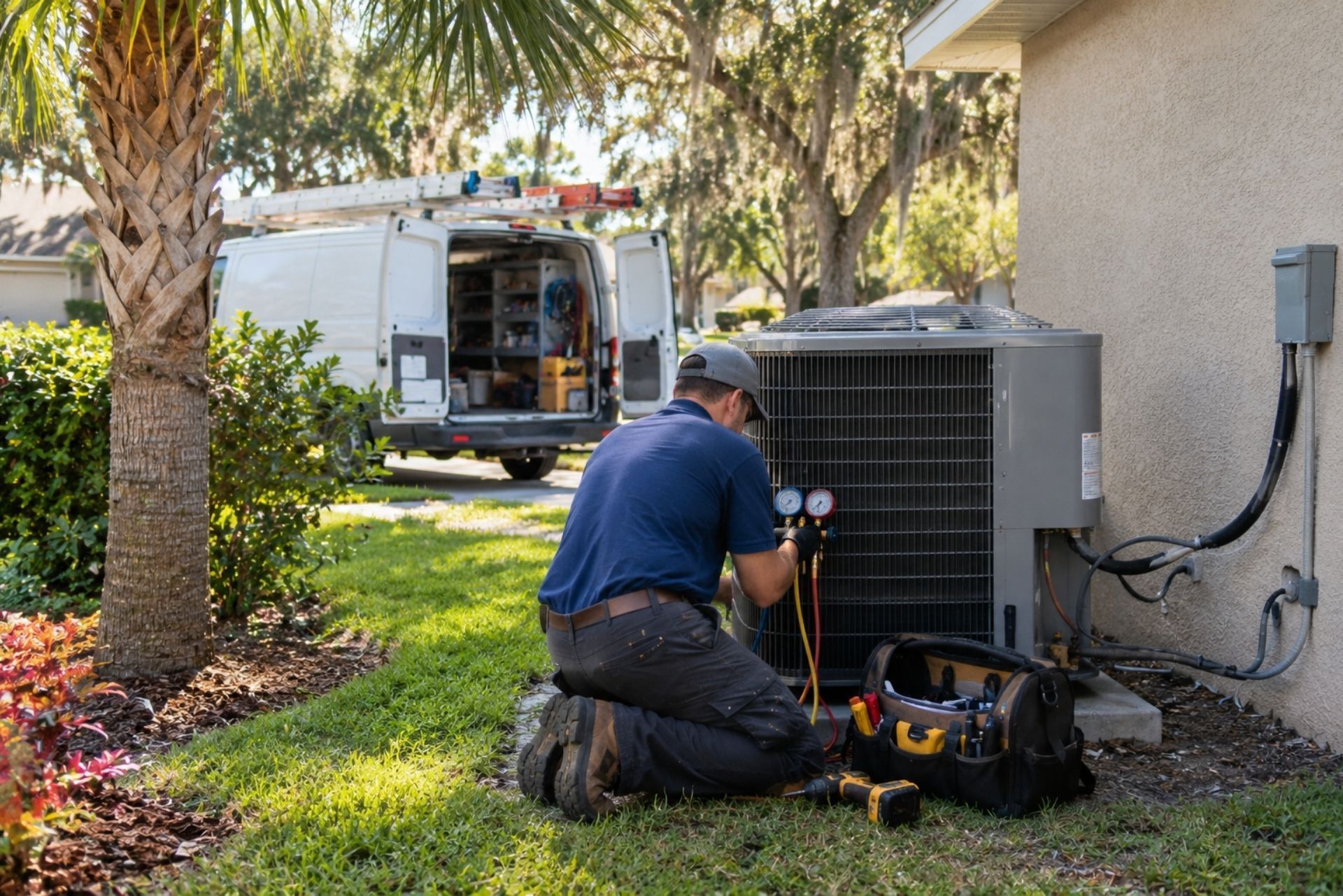
Picture a technician in Mandarin brazing a line set in a cramped attic on a July afternoon. A stray spark ignites insulation, smoke damages the second floor, and the homeowner's insurer files a subrogation claim against your company within weeks. That single job could erase years of profit if your coverage has gaps.
HVAC Contractor Insurance in Jacksonville, FL is not a box you check once at licensing. It functions as a financial backstop, a bidding requirement, and a factor in what your business is worth if you ever sell it. Northeast Florida adds its own pressures: hurricane season, coastal corrosion, year-round cooling demand, and general contractors who scrutinize certificates before your crew sets foot on site.
This guide covers what each policy actually does, where standard policies fall short, how Florida's licensing rules tie into your insurance, and what drives premiums in Duval County. You will also find a basic vs. comprehensive comparison table and answers to the questions contractors ask most often. Use it as a working checklist before your next renewal or before you submit a bid on a commercial project.
The Risk Landscape for Jacksonville HVAC Contractors
Jacksonville's climate keeps HVAC crews busy, and that volume creates exposure. Long cooling seasons mean more service calls, more attic work in extreme heat, and more opportunities for something to go wrong in a client's home or building.
The most frequent claim scenarios for local contractors include:
- Water damage: A clogged or improperly sloped condensate line overflows and ruins a ceiling and drywall below an air handler.
- Fire and electrical damage: Electrical arcing at a disconnect, a loose lug on a compressor contactor, or a brazing torch igniting nearby materials.
- Refrigerant releases: A failed brazed joint leaks refrigerant weeks after installation, triggering both property and environmental questions.
- Worker injuries: Heat exhaustion, falls from ladders and rooftops, and lacerations from sheet metal.
- Vehicle accidents: Service vans logging heavy miles on I-95, I-295, and J. Turner Butler Boulevard.
Weather is the local wildcard. After a named storm, demand spikes, crews work longer hours, and tools stored in trucks or at job sites face theft and flood exposure. Coastal properties in Atlantic Beach, Neptune Beach, and Ponte Vedra also accelerate corrosion on condensers, which can lead to disputes over whether a failure stemmed from your workmanship or from external perils.
Another risk is delayed liability. Problems such as phase imbalances that cause motor burnout, or undersized ductwork that strains a system, may not surface for months. This matters because many claims arrive long after you've invoiced the job, so your coverage needs to respond to work you completed in the past, not only work in progress.
HVACInsure is fully licensed and permitted to sell contractor and commercial insurance in Texas.
We proudly serve clients throughout Texas and maintain partnerships with local Texas insurance carriers to ensure HVAC professionals receive compliant, affordable, and comprehensive coverage that meets project and regulatory requirements.
Core Insurance Coverages Every HVAC Business Needs
Three policies form the foundation of any HVAC insurance program in Northeast Florida. Most general contractors, property managers, and commercial clients will ask for proof of all three before awarding work.
General Liability: Protecting Against Job Site Accidents
General Liability covers third-party bodily injury and property damage arising from your operations. If your technician knocks over a homeowner's antique while moving a furnace, or a customer trips over your hose in a hallway, this policy responds to the claim and your legal defense costs.
Florida sets a floor here. Under Rule 61G4-15.003, HVAC contractors must carry at least $100,000 in public liability and $25,000 in property damage insurance to keep an active license. Treat those figures as the legal minimum, not a recommendation. A single water damage claim in a high-end Riverside or San Marco home can exceed them quickly, and most commercial contracts require substantially higher limits.
Pay close attention to completed operations coverage. This is the part of your General Liability policy that responds after a job is finished, such as a refrigerant leak at a brazed joint that appears three months later or condensate drainage that slowly rots a subfloor. Confirm that your policy includes completed operations and that the aggregate limit is adequate for the volume of installs you perform.
The catch is pollution. Standard General Liability policies often exclude refrigerant venting and similar releases, which leaves a gap that many contractors don't discover until a claim is denied. More on that in the equipment section below.
Workers' Compensation: Florida State Mandates
Florida requires most construction-industry employers, including HVAC contractors, to carry workers' compensation even with a small crew. The state's construction classification rules are stricter than those for non-construction businesses, so do not assume a small headcount exempts you. Confirm your obligations with the Florida Division of Workers' Compensation and your agent.
Workers' comp pays medical bills and lost wages for employees injured on the job, and it generally protects you from being sued directly by the injured worker. For HVAC crews, typical claims involve falls from roofs, heat illness in attics, back injuries from lifting condensers, and electrical shock.
Your Experience Modification Rate (EMR) directly affects what you pay. An EMR of 1.0 represents the industry average for your classification. Below 1.0 means your loss history is better than average and earns a premium credit, while above 1.0 triggers a surcharge. Many commercial general contractors screen out subs with an EMR above 1.0 entirely.
One thing to keep in mind: EMR also matters in a business acquisition. A buyer evaluating your company will review loss runs and EMR because a high modifier signals future premium costs and weaker safety controls. A clean EMR below 1.0 makes your business more marketable and can support a stronger valuation.
Commercial Auto for Your Service Fleet
Personal auto policies typically exclude vehicles used primarily for business, which means a technician's accident in a company van could go uncovered. Commercial Auto covers liability and physical damage for vehicles your business owns, leases, or operates.
If employees use their own trucks for service calls, add hired and non-owned auto coverage. Without it, a serious accident caused by an employee driving a personal vehicle on your business can land squarely on your company. Also review whether tools and equipment stored in vans are covered under your auto policy. In most cases they are not, which leads directly to the next section.
Specialized Coverage for HVAC Tools and Equipment
Your vans carry recovery machines, vacuum pumps, manifold gauges, combustion analyzers, brazing rigs, and inventory such as compressors and control boards. Commercial Auto rarely covers this property, and a general business property policy often only covers items at your shop.
Inland marine coverage, often called a tools and equipment floater, fills that gap. It protects gear in transit, at job sites, and in storage. Ask your agent these questions before you buy:
- Valuation method: Replacement cost pays for new equivalent equipment. Actual cash value deducts depreciation, which can leave you short on older but functional tools.
- Theft conditions: Some policies require visible signs of forced entry or exclude theft from unattended vehicles overnight.
- Rental reimbursement: Coverage for renting replacement equipment while you wait on a claim keeps crews billing.
- Expediting expenses: Pays to rush replacement parts or tools so jobs aren't delayed.
- Exclusions: Watch for wear and tear, mechanical breakdown, and inherent vice, which excludes losses caused by a defect within the item itself.
Pollution and environmental liability deserves its own line item. Because standard General Liability policies often exclude refrigerant venting, a pollution or environmental liability endorsement is recommended for HVAC contractors, typically costing between $500 and $2,000 annually. Compared with the cost of an uncovered remediation claim, that is a modest expense.
If your company performs load calculations, designs duct systems, or specifies equipment for commercial clients, consider Professional Liability (E&O). It covers financial loss from design errors or faulty recommendations, such as an undersized system that fails to cool a server room, which General Liability typically does not address.
To support any equipment claim, document losses carefully: photographs of damaged or failed equipment, serial numbers, purchase receipts, calibrated thermometer readings where relevant, and written diagnostic reports from technicians. Insurers move faster when the evidence is complete.
Comparing Basic vs. Comprehensive HVAC Policies
Many Jacksonville contractors start with a minimum-compliance package and never revisit it. That works until a client requests higher limits or a claim lands outside the policy's scope. The table below shows where the two approaches differ.
| Coverage Area | Basic Package | Comprehensive Program |
|---|---|---|
| General Liability | Florida minimum limits | Higher limits matched to contract requirements |
| Completed Operations | May be limited or low aggregate | Included with adequate aggregate |
| Pollution / Refrigerant | Often excluded | Endorsement or standalone policy |
| Workers' Comp | Required coverage | Required coverage plus safety program to manage EMR |
| Commercial Auto | Owned vehicles only | Adds hired and non-owned auto |
| Tools and Equipment | Not included | Inland marine at replacement cost |
| Professional Liability | Not included | Included for design or consulting work |
| Umbrella | None | Extra limits over GL, auto, and employer's liability |
| Bid Eligibility | Small residential jobs | Commercial, multifamily, and municipal projects |
Here's what that means for you: the basic route keeps your license active, but it can lock you out of profitable commercial work and leave you personally exposed. A comprehensive program costs more, yet it positions insurance as a business asset that helps you win larger contracts and supports a higher valuation if you sell.
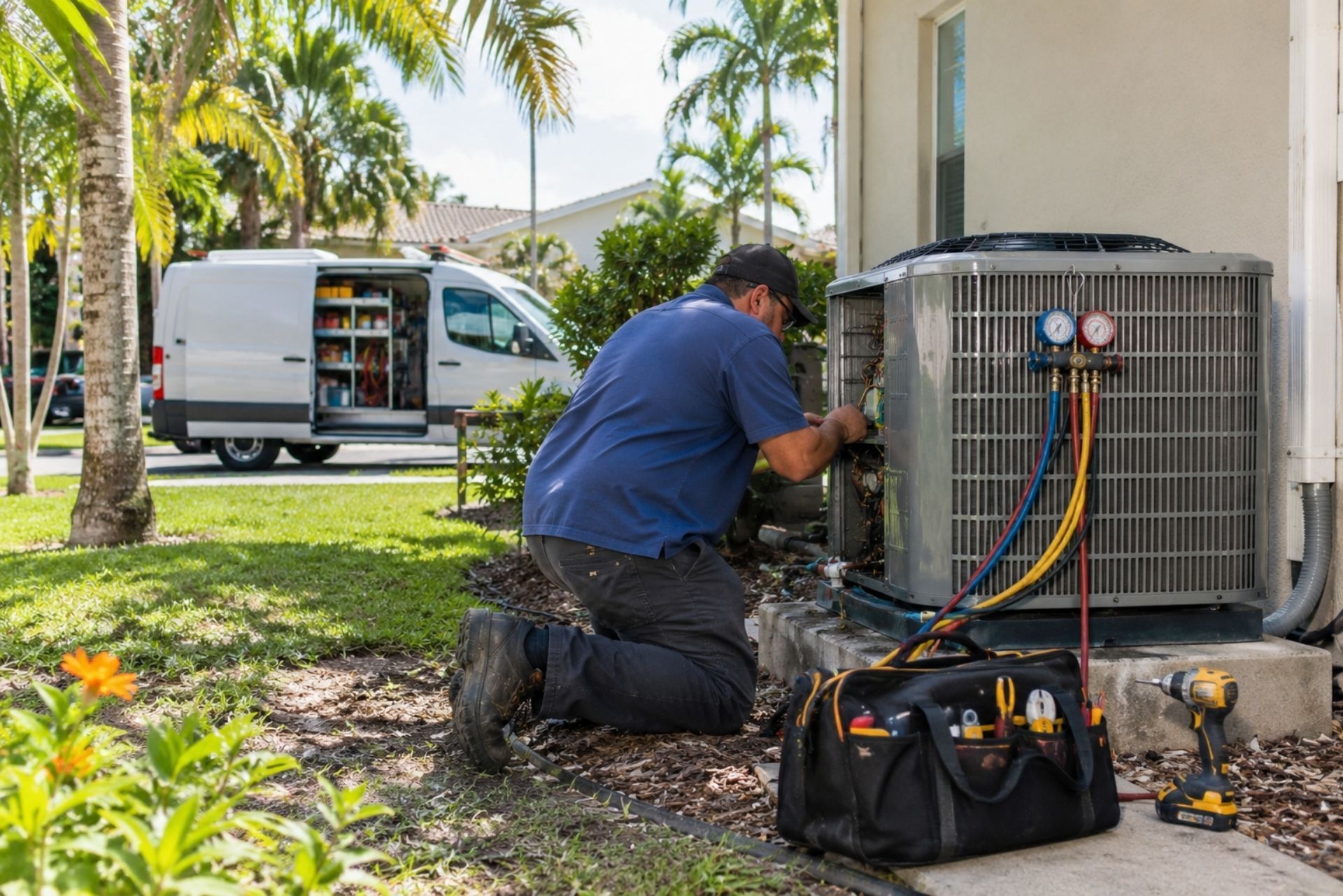
Factors Influencing Insurance Costs in Northeast Florida
Premiums for HVAC businesses vary widely, and insurers price each account individually. Underwriters look at what you do, where you do it, and how often things have gone wrong in the past.
Impact of Claims History and Business Size
Your loss runs are the first document an underwriter reviews. Frequent small claims, such as repeated water damage from condensate overflows, can raise rates as much as one large loss because they suggest a pattern. Rapid response and good documentation help contain severity, but prevention through installation checklists and callbacks matters most.
Size drives premium through payroll, revenue, and vehicle count. Workers' comp is calculated largely on payroll by classification, General Liability is often rated on revenue or payroll, and auto premiums scale with each van and driver. Driver records matter too. One technician with multiple violations can raise your entire auto premium, so check motor vehicle records before hiring.
That said, growth isn't a penalty if you manage it. Contractors who document safety training, hold an EMR below 1.0, and maintain clean loss runs often secure better terms as they expand.
Risk Assessment for High-Rise and Commercial Projects
Work above ground level changes the underwriting picture. Rooftop units on downtown towers, crane lifts, and work in occupied commercial buildings increase both injury severity and potential property damage. A failed condensate pan in a high-rise can damage multiple floors and tenant spaces in one event.
Commercial clients typically require higher General Liability limits, an umbrella, additional insured endorsements, primary and non-contributory wording, and waivers of subrogation. Hospitals, data centers, and labs may ask for Professional Liability if your team handles design. Expect underwriters to ask what percentage of your revenue comes from commercial versus residential work and the maximum height you work at. Answer accurately, because misrepresentation can void coverage when you need it most.
Licensing and Insurance Requirements in Duval County
Florida HVAC contractors are licensed at the state level through the Construction Industry Licensing Board, either as certified contractors who can work statewide or as registered contractors limited to local jurisdictions. Your insurance is tied directly to that license.
Key requirements to track:
- Liability minimums: Florida rules require HVAC contractors to maintain $100,000 in public liability and $25,000 in property damage coverage for an active license.
- Workers' comp: Proof of coverage or a valid exemption must stay current with the state.
- Local registration: Jacksonville's consolidated city-county government may require local registration and proof of insurance when you pull permits.
- Certificate accuracy: The license holder's name and business entity on your certificate should match your licensing records exactly.
A lapse is more than a paperwork problem. If your liability policy cancels for nonpayment, your license status can be affected, and any job you perform during the gap is uninsured. Set renewals on autopay or calendar reminders well ahead of expiration.
On the flip side, contracts often demand far more than the state minimum. A property management company with apartment complexes in Southside may require higher per-occurrence limits, an umbrella, and additional insured status. Read insurance clauses before signing, not after, so your agent has time to adjust coverage.
Common HVAC Insurance Questions Answered
These are the questions Jacksonville contractors raise most often, answered in plain terms.
How much does HVAC insurance cost in Jacksonville?
There is no single price, because premiums depend on payroll, revenue, vehicle count, claims history, and the type of work you perform. A pollution endorsement typically runs between $500 and $2,000 a year, while your other policies are priced on your specific risk profile. Request quotes from an agent who works with multiple carriers to see a realistic range for your business.
Do I need insurance if I only do residential repairs?
Yes. Florida's liability minimums apply to licensed HVAC contractors regardless of whether you work in homes or commercial buildings. Residential jobs also carry real risk, from water damage to injuries inside a client's home.
Does my General Liability policy cover refrigerant leaks?
Often it does not, because many standard policies exclude pollution events. Ask your agent about a pollution or environmental liability endorsement.
What happens if a problem shows up after I finish a job?
Completed operations coverage, part of most General Liability policies, responds to claims that arise after the work is done. Confirm it's included and that the limit fits your install volume.
Are my tools covered if they're stolen from my van?
Usually not under Commercial Auto. You need inland marine or tools and equipment coverage, and you should check whether it has theft conditions for unattended vehicles.
Will a high EMR hurt my business?
It can. An EMR above 1.0 raises workers' comp premiums and may disqualify you from commercial bids, and buyers review it closely during an acquisition.
Strong coverage protects more than your next job. It keeps your license active, qualifies you for bigger contracts, and preserves the value you've built. The best HVAC contractor insurance programs in Jacksonville, FL combine state-required liability and workers' comp with the gaps most contractors overlook: completed operations, pollution, tools, and professional liability.
Before your next renewal, work through this checklist:
- Pull your current policies and confirm limits exceed Florida minimums and contract requirements.
- Verify completed operations coverage and look for pollution exclusions.
- Review your EMR and loss runs, and fix recurring claim causes.
- Add hired and non-owned auto if employees drive personal vehicles.
- Schedule tools at replacement cost under an inland marine policy.
- Ask an independent agent to quote a comprehensive program side by side with your current plan.
Treat insurance as an investment in your company's future, and your business will be ready for whatever the next storm season brings.
Recognized by National HVAC Trade Associations
These trusted organizations set best practices and standards that carriers rely on when underwriting HVAC risks.
Membership signifies adherence to HVAC industry standards and contractor best practices.
Coverage for Crews, Vehicles, and Tools
Insurance for HVAC Contractors
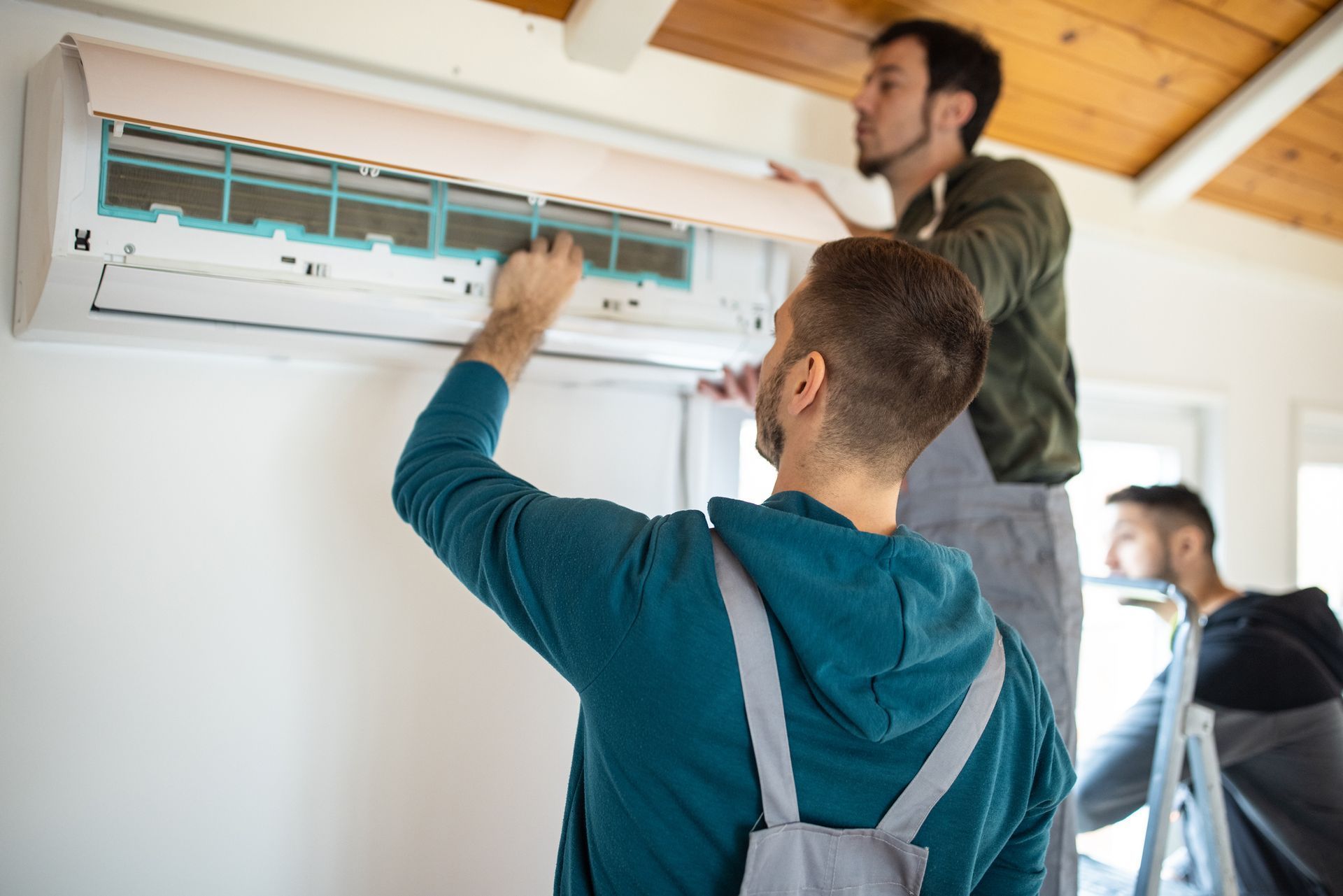
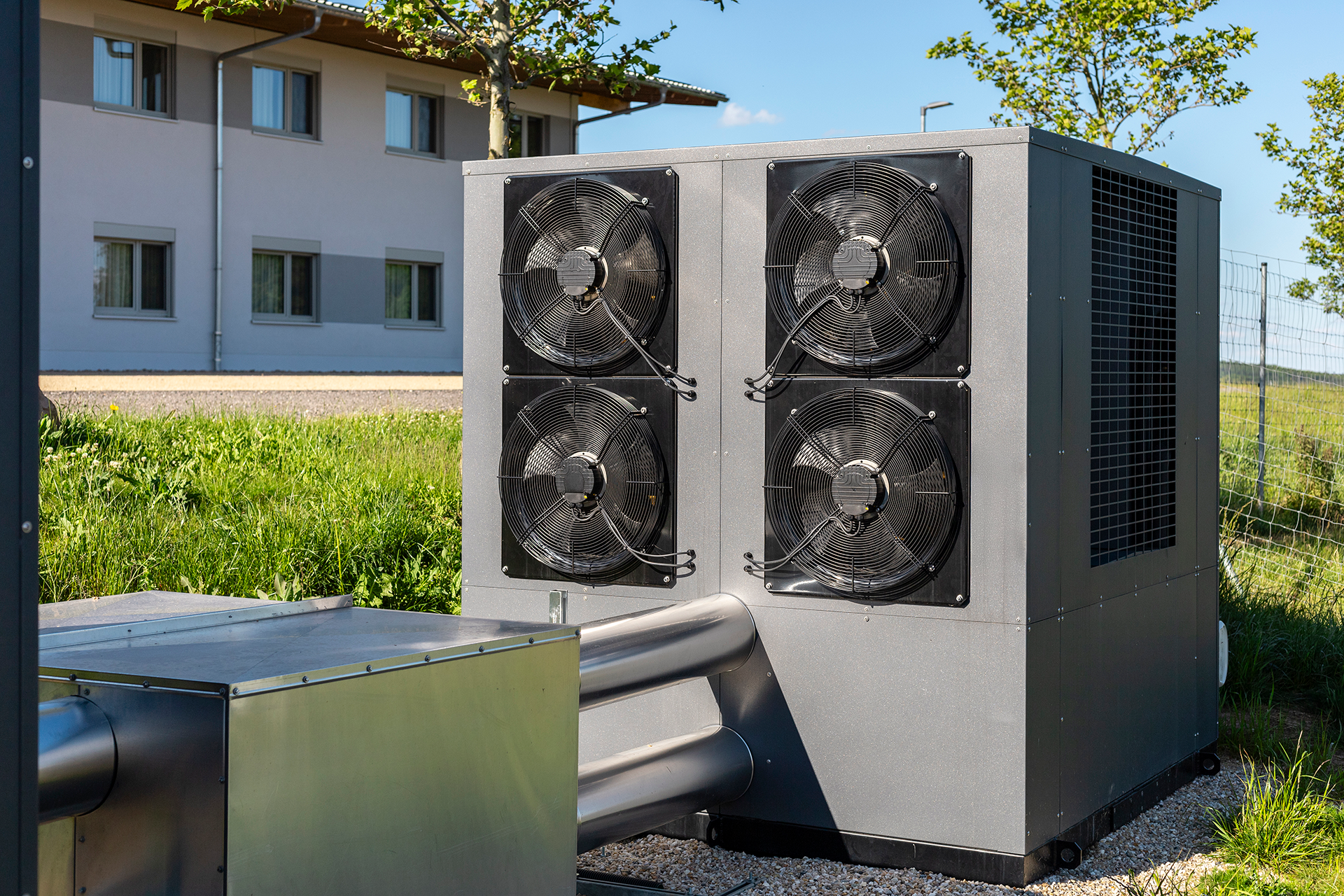
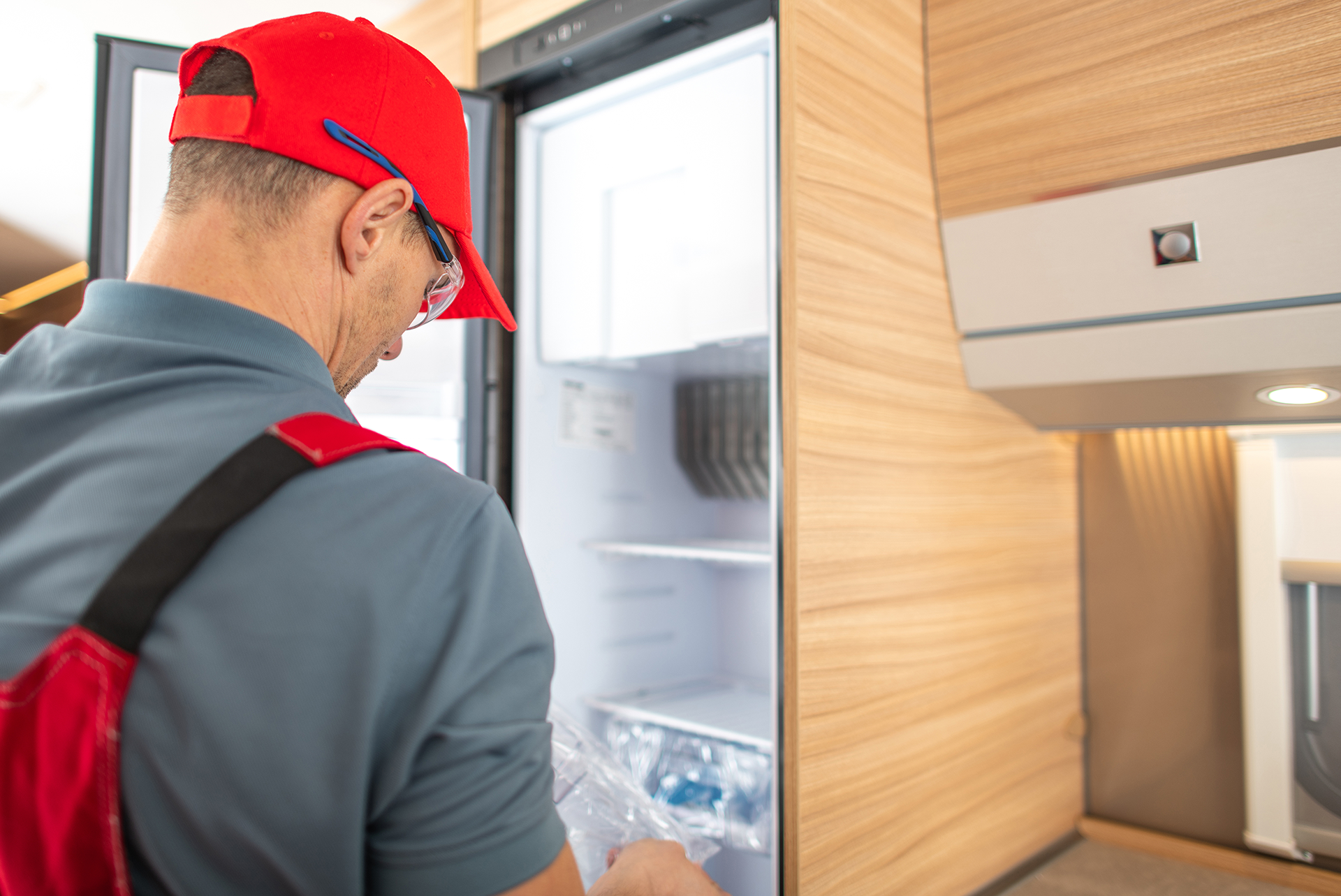
We provide business insurance designed for HVAC contractors. These policies protect your crew, vehicles, and tools while helping you meet project requirements. Every policy is explained clearly and delivered quickly so you can work without delays.
Resources
Insurance Tips for HVAC Contractors
Our blog is built for contractors who want fast answers. Each article covers common questions and risks in under five minutes of reading.
Frequently Asked Question
Common HVAC Contractor Insurance Questions
These FAQs address common contractor questions. As HVACInsure grows, we will update this section with real client experiences and answers.
Why should an HVAC contractor use HVACInsure instead of a general agency?
Specialists understand jobsite requirements, certificate wording, and common endorsements for HVAC work. You get cleaner paperwork, faster approvals, and coverage that fits how your crews operate.
This reduces delays at the gate, avoids gaps, and helps you pass compliance checks the first time.
How fast can I get a Certificate of Insurance (COI)?
Most standard COIs are issued the same business day after binding or updates. If you need additional insured, primary/non-contributory, or waiver language, we prepare it correctly the first time.
Our goal is simple: get your crew on site without paperwork delays.
What coverages do HVAC contractors usually need?
Core policies include General Liability, Commercial Auto, Workers’ Comp, Property/Tools, Inland Marine, and Umbrella. Many projects require higher limits and specific endorsements.
We align your coverage with contract terms and explain each choice in plain language.
Will my tools and scheduled equipment be covered in vans or on jobsites?
Yes. Inland Marine (tools and equipment) can cover items in transit, stored in vehicles, or staged on site.
High-value items can be scheduled, and limits can match your daily field use to keep work moving.
Can I lower my premium without weakening protection?
Often, yes. Clean driver lists, accurate payrolls, safety programs, and bundling policies can help.
We review your profile, request carrier credits, and adjust limits and deductibles to control cost while meeting project requirements.
What should I do after a loss?
Contact us right away so we can file with the correct carrier and set expectations. We guide documentation, next steps, and follow-ups until closure.
Fast reporting and clear records help resolve claims sooner and keep your team focused on work.

Still have questions?
Can’t find the answer you’re looking for? Please chat to our friendly team!
Contact Us