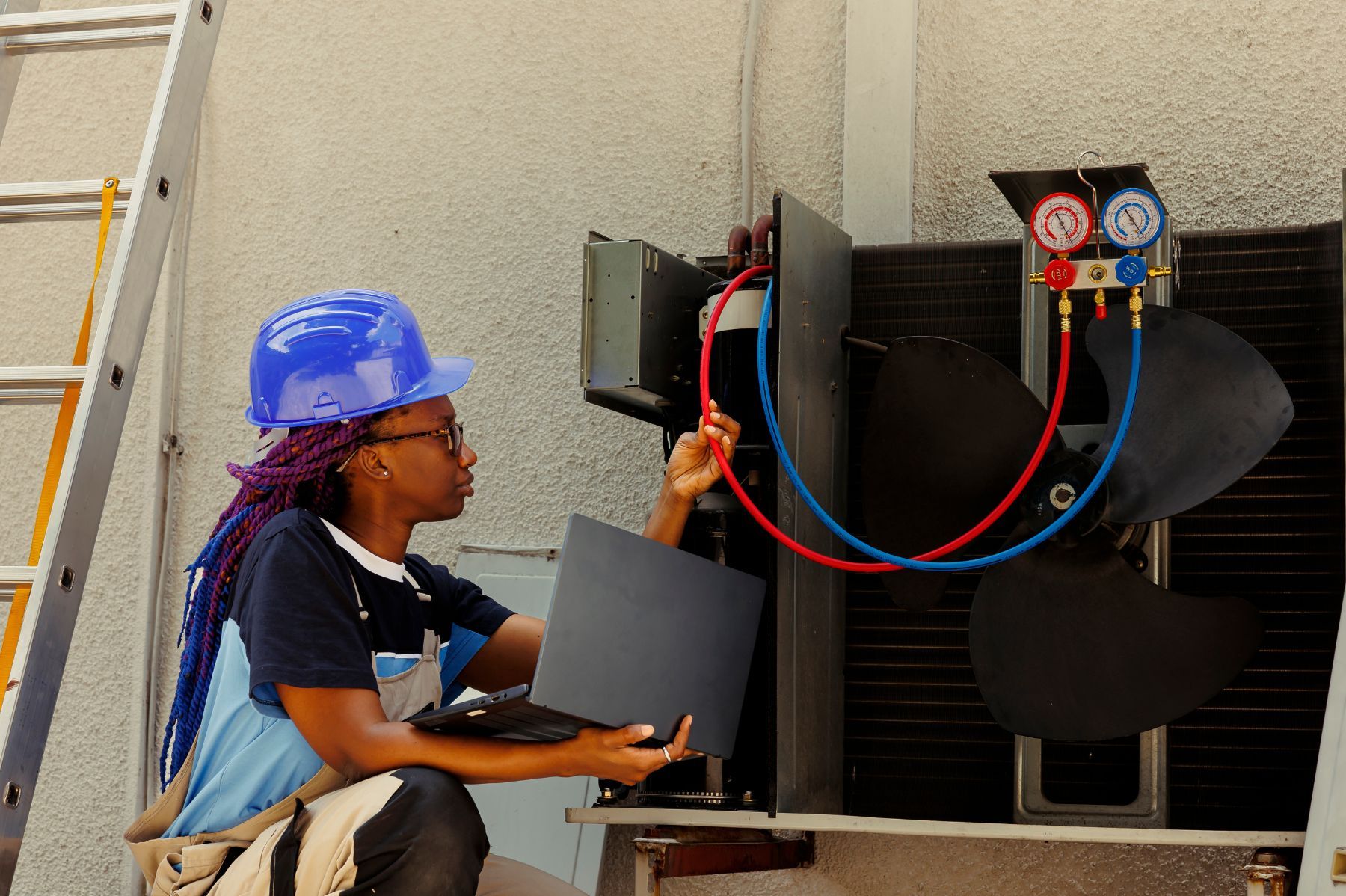
Benchmark HVAC Insurance Costs by Revenue and Region
See How We're Different
or call us: (469) 678-8001

Understanding HVAC Insurance Cost Drivers
Running an HVAC business means managing risks that most industries never encounter. Your technicians work with high-voltage electrical systems, handle refrigerants requiring EPA certification, and climb onto rooftops in extreme weather conditions. These operational realities directly shape what you pay for coverage. Understanding HVAC insurance cost benchmarking by revenue and region helps you determine whether your current premiums reflect fair market rates or whether you're overpaying compared to similar contractors.
Insurance carriers assess HVAC companies through a specific lens. They examine your service mix: residential maintenance carries different risk profiles than commercial refrigeration installation. A contractor specializing in rooftop unit replacements faces exposure to falls, equipment damage, and property liability that a ductwork cleaning service simply does not. Your premium reflects this calculus.
General Liability and Workers Compensation Fundamentals
General liability insurance protects your business when third-party property damage or bodily injury claims arise. For HVAC contractors, this commonly involves scenarios like a technician accidentally damaging a customer's ceiling during an attic installation or a refrigerant leak affecting adjacent business inventory. Typical general liability policies for HVAC firms range from $1,500 to $6,000 annually for $1 million in coverage, depending on your revenue and claims history.
Workers compensation represents your largest insurance expense in most states. HVAC work falls under classification codes with elevated risk ratings due to electrical exposure, heights, and repetitive motion injuries. Expect to pay between $8 and $15 per $100 of payroll in moderate-risk states, though high-risk jurisdictions push this figure considerably higher.
The Impact of Claims History on Premium Rates
Your experience modification rate, commonly called your mod rate, functions as a multiplier on your workers compensation premium. A mod rate of 1.0 represents industry average. Each workplace injury claim pushes this number upward, sometimes for three to five years following the incident. A single serious injury resulting in $50,000 or more in medical costs can increase your annual premium by 20% to 35% during that period.
General liability claims affect renewal pricing similarly. Carriers track your loss ratio, comparing claims paid against premiums collected. Contractors with loss ratios exceeding 60% face non-renewal notices or substantial rate increases. Documenting near-misses and implementing corrective actions demonstrates risk management commitment to underwriters.
Insurance Benchmarks by Annual Revenue
Your gross annual revenue serves as the primary rating basis for general liability premiums. Carriers use this figure to estimate your exposure level: more revenue typically means more service calls, more employees on job sites, and more opportunities for something to go wrong.
Small HVAC Operations: Under $500k Revenue
Owner-operator businesses and small crews generating under $500,000 annually typically pay between $2,500 and $5,500 for a basic commercial package. This includes general liability at $1 million per occurrence, commercial auto for one to two vehicles, and a business owner's policy covering tools and office equipment.
Workers compensation for a three-person crew in this revenue bracket runs approximately $8,000 to $18,000 annually, depending on your state and classification codes. Sole proprietors can sometimes exclude themselves from workers comp requirements, though this creates personal liability exposure if injured on a job site.
Mid-Sized Contractors: $500k to $2M Revenue
Contractors in this range face more complex insurance needs. Your general liability premium typically falls between $4,000 and $12,000 annually. Commercial umbrella coverage becomes essential at this stage, adding $1 million to $5 million in additional protection for $1,200 to $4,000 per year.
Workers compensation costs scale with payroll. A company running $400,000 in annual payroll pays roughly $32,000 to $60,000 for workers comp in average-rate states. Fleet insurance for five to ten service vehicles adds another $8,000 to $20,000 depending on driver records and vehicle types.
Enterprise HVAC Firms: Over $2M Revenue
Large HVAC operations face premium structures reflecting their substantial exposure. General liability often exceeds $15,000 annually, while workers compensation for companies with $1 million or more in payroll can reach $80,000 to $150,000. These firms typically work with specialized commercial insurance brokers who negotiate multi-year agreements and structured payment plans.
Enterprise contractors often require contractor's pollution liability, employment practices liability, and cyber coverage. A comprehensive insurance program for a $5 million HVAC company commonly totals $150,000 to $300,000 annually across all coverage lines.
Regional Price Variance Across the United States
Geography significantly influences HVAC insurance pricing. State regulatory environments, litigation climates, and local labor markets create substantial premium differences for identical coverage levels.
High-Cost States and Regulatory Environments
California, New York, and Florida consistently rank among the most expensive states for HVAC insurance. California's workers compensation system, despite reforms, still produces rates 40% to 60% higher than the national median. A California HVAC contractor pays approximately $12 to $18 per $100 of payroll compared to $6 to $10 in states like Indiana or Tennessee.
New York's labor law Section 240, often called the scaffold law, creates strict liability for falls from heights. This regulation dramatically increases general liability premiums for any contractor working on elevated surfaces. HVAC companies performing rooftop installations in New York face premiums 50% to 100% higher than comparable operations in neighboring Pennsylvania.
Coastal vs. Inland Risk Profiles
Coastal operations face additional exposure from hurricane and flood risks. While standard general liability excludes flood damage, carriers factor regional catastrophe potential into overall pricing. HVAC contractors in Florida, Texas Gulf Coast, and Atlantic seaboard states pay elevated premiums reflecting this environmental risk.
Commercial property coverage for HVAC shop facilities in hurricane zones often requires separate windstorm policies. A 5,000-square-foot warehouse in Miami might cost $15,000 to $25,000 annually for property coverage, compared to $4,000 to $8,000 for an equivalent facility in Ohio.
Specialized Coverage Costs for HVAC Professionals
Beyond standard general liability and workers compensation, HVAC contractors require specialized policies addressing industry-specific exposures.
Commercial Auto and Fleet Insurance Estimates
Service vehicles represent both essential business assets and significant liability exposure. Commercial auto insurance for HVAC fleets typically costs $1,800 to $4,500 per vehicle annually. Factors affecting pricing include driver age and experience, vehicle type, annual mileage, and territory.
| Fleet Size | Annual Premium Range | Per-Vehicle Average |
|---|---|---|
| 1-3 vehicles | $5,000 - $12,000 | $3,500 |
| 4-10 vehicles | $12,000 - $35,000 | $3,000 |
| 11-25 vehicles | $30,000 - $75,000 | $2,800 |
Telematics programs monitoring driver behavior can reduce fleet premiums by 10% to 15%. Carriers reward contractors who implement GPS tracking and dashcam systems.
Inland Marine and Tools Coverage Premiums
HVAC technicians carry substantial tool inventories in their service vehicles. Recovery coils, vacuum pumps, refrigerant recovery machines, and diagnostic equipment easily total $15,000 to $40,000 per truck. Inland marine coverage protects these assets when standard commercial auto policies exclude tools and equipment.
Expect to pay approximately $500 to $1,500 annually per $25,000 in tool coverage. Policies typically carry $500 to $1,000 deductibles and may require itemized equipment schedules for high-value items.
Professional Liability and Errors & Omissions
Design-build HVAC contractors and those providing engineering specifications need professional liability coverage. This policy responds when your design recommendations or system specifications cause financial harm to clients, such as undersized equipment failing to maintain temperature requirements for a pharmaceutical cold storage facility.
Professional liability premiums for HVAC contractors range from $2,000 to $8,000 annually for $1 million in coverage. Contractors performing work for hospitals, data centers, or food processing facilities often face contractual requirements for this coverage.
Strategies to Optimize and Lower HVAC Premiums
Reducing insurance costs requires systematic attention to risk management rather than simply shopping for cheaper quotes.
Implementing Safety Training and Certifications
Documented safety programs directly influence premium calculations. OSHA 10 or OSHA 30 certifications for all field employees signal commitment to workplace safety. Carriers commonly offer 5% to 10% premium credits for companies maintaining formal safety programs with documented training records.
EPA 608 certification compliance, fall protection training, and electrical safety programs reduce both incident frequency and claim severity. Maintain training records for at least five years and provide these documents during insurance renewals.
Selecting Deductibles to Balance Risk and Cash Flow
Higher deductibles reduce premiums but increase your out-of-pocket exposure when claims occur. A $1,000 deductible on general liability might cost $5,000 annually, while a $5,000 deductible drops the premium to $4,200. You save $800 per year but accept $4,000 more risk per claim.
Calculate your break-even point based on historical claim frequency. Contractors averaging one general liability claim every three years benefit from lower deductibles. Those with clean five-year histories often profit from higher deductibles and premium savings.
Frequently Asked Questions
How often should I benchmark my HVAC insurance costs against industry standards? Review your premiums annually during the renewal process. Compare quotes from at least three carriers every two to three years to ensure competitive pricing.
Does my service mix affect insurance costs more than my revenue? Service type significantly impacts rates. Commercial refrigeration work carries higher premiums than residential maintenance. A $1 million commercial contractor often pays more than a $2 million residential-focused company.
Can I reduce workers compensation costs by classifying employees differently? Classification codes are strictly regulated. Misclassifying employees as lower-risk categories constitutes fraud and triggers severe penalties during audits. Work with your carrier to ensure accurate classifications.
What documentation helps during the claims process? Maintain photographs of job sites before and after work, signed customer agreements, equipment serial numbers, and timestamped service records. This evidence supports your position during liability disputes.
How do subcontractors affect my insurance costs?
Uninsured subcontractors create direct liability exposure. Require certificates of insurance from all subcontractors and verify coverage remains active throughout your project timeline.
Making Informed Insurance Decisions
Understanding how revenue and regional factors influence your premiums empowers better purchasing decisions. Benchmark your current costs against the ranges outlined here to identify potential overpayment. Request detailed premium breakdowns from your broker showing exactly how carriers calculate your rates.
Invest in documented safety programs, maintain clean claims histories, and review your coverage annually. These practices, combined with informed HVAC insurance cost benchmarking by revenue and regional standards, position your business for sustainable premium management. Contact a commercial insurance broker specializing in contractor coverage to evaluate whether your current program reflects appropriate market rates for your specific operation.