A late afternoon service call on Peachtree Street can start routine and end expensive. A failed rooftop unit in peak summer can shut down a busy Atlanta restaurant and turn one visit into a property damage dispute and a lost commercial account. Across the industry, hazardous HVAC work, from electrical shocks to refrigerant leaks and heavy lifts, generates more than twenty five thousand insurance claims each year, and a large share come from equipment failures and improper refrigerant handling according to recent HVAC insurance research.
For an Atlanta HVAC contractor, that kind of risk is not abstract. Every truck that rolls, every attic crawl in Atlanta humidity, and every rooftop package unit on a Buckhead strip center carries real exposure. The right insurance program does more than check a box for a commercial landlord or general contractor. It keeps a bad day on a jobsite from turning into the end of the business.
Why HVAC Contractor Insurance Matters So Much In Atlanta
Atlanta gives HVAC companies steady work. Long cooling seasons, dense commercial corridors, and a mix of older buildings and new construction keep crews busy. At the same time, those same conditions create an unusually wide range of risks, from water damage in midrise condo retrofits to electrical issues in older homes and heavy crane lifts on downtown projects.
Industry data shows that individual HVAC insurance claims often fall in the tens of thousands of dollars, and when those claims are multiplied across more than twenty five thousand incidents per year, the combined cost to HVAC businesses runs into more than one billion dollars annually based on recent claim studies. For a small or midsize Atlanta contractor, one serious loss can erase several years of profit. Without coverage, it can also strain relationships with key commercial clients who expect their vendors to be financially stable and properly insured.
There is also the simple reality that HVAC work touches three big areas that generate lawsuits. People can be injured on or around the jobsite. Client property can be damaged by leaks, electrical problems, or dropped equipment. Equipment that you install, maintain, or repair can fail later, and unhappy customers do not always care whether the cause was a part defect, user error, or workmanship.

HVACInsure is fully licensed and permitted to sell contractor and commercial insurance in Texas.
We insure HVAC contractors throughout Georgia and in 47 other states, providing compliant, affordable, and comprehensive coverage that meets project and regulatory requirements.
Core Insurance Policies Atlanta HVAC Contractors Should Consider
Most Atlanta HVAC businesses do not need an exotic insurance program. They need a tight set of core policies that work together. The right mix protects against third party lawsuits, protects your crew, keeps trucks and tools on the road, and backs you up if a fire, storm, or theft hits your own property.
General liability, the foundation of your protection
General liability insurance sits at the center of almost every HVAC contractor insurance package. It is designed to respond when a third party claims you caused bodily injury or property damage. Think about a refrigerant line that leaks and ruins a ceiling, a burned compressor start that sparks a small fire, or a client who trips over your tools during a service call.
In the Atlanta market, general contractors, property managers, and large commercial clients will usually require proof of active general liability coverage before they award a contract or allow you on site. Many will insist on being named as an additional insured and may ask for specific limit amounts and endorsements in their vendor agreements. Keeping this coverage in place is as much about staying employable as it is about risk transfer.
Workers compensation for crews in the field
Once you have employees working for you, workers compensation is not optional in most situations. HVAC technicians handle live electrical systems, climb ladders, lift heavy equipment, and often work in tight, hot spaces like attics or mechanical rooms. That combination makes on the job injuries a real possibility.
Workers compensation typically covers medical expenses and some lost wages for employees who are hurt while working. Even a relatively minor back injury or fall from a ladder can quickly become expensive when medical treatment, physical therapy, and time away from work are factored in. For many owners, workers compensation is also a way to show good faith to their team and to general contractors who expect all subs on a project to cover their crews properly.
Commercial auto for service trucks and installation vehicles
Atlanta traffic is not kind to unprotected businesses. From the Connector at rush hour to tight neighborhood streets in Virginia Highland or Grant Park, fender benders and more serious collisions are part of the risk picture. Personal auto policies usually do not cover vehicles that are primarily used for business, especially when they carry tools, equipment, or signage.
Commercial auto insurance can help pay for damage you cause to others in an accident, injuries to people outside your vehicle, and sometimes damage to your own covered trucks and vans. It can also respond if your driver is hit by someone who does not carry enough insurance. Without it, a single crash that totals a fully stocked service van can leave your business scrambling to keep up with scheduled work.
Inland marine or tools and equipment coverage
Most HVAC contractors in Atlanta carry a rolling inventory of expensive tools and equipment. Vacuum pumps, gauges, recovery machines, portable lifts, specialty hand tools, and even inventory like motors and control boards travel from job to job. Standard property policies are not always designed to protect mobile property.
Tools and equipment coverage, often written as an inland marine policy, is built for gear that moves and lives on trucks or trailers. It can help if your tools are stolen from a jobsite, a truck is broken into overnight, or a crane accident damages a new rooftop unit before it is fully installed. For fast growing contractors who constantly invest in better tools, this coverage keeps those purchases from sitting entirely on the balance sheet as an uninsured risk.
Professional and pollution considerations
Traditional general liability coverage focuses on bodily injury and property damage, but it often has gaps around professional errors and pollution. HVAC work, especially with refrigerants and controls, sometimes crosses into those gray areas. A faulty design recommendation, a misconfigured control sequence, or improper refrigerant handling can all trigger allegations that go beyond basic property damage.
Some contractors choose to add professional liability or errors and omissions coverage to address claims tied to design advice, consulting, or system optimization work. Others look at pollution endorsements to address spills or releases of refrigerant, oil, or other regulated substances. These are not always required by clients, but they can be the difference between a covered loss and writing a painful check out of operating capital.
What HVAC Contractor Insurance Typically Costs In Atlanta
Cost is often the next question after coverage. Owners want to know whether they are overpaying, underinsuring, or somewhere in the right range for a business of their size. While every Atlanta HVAC company has its own risk profile, revenue mix, and claims history, there are some helpful benchmarks.
Industry research shows that HVAC liability insurance premiums often land between roughly 1.3 percent and 2.6 percent of a contractor's annual gross revenue, and a small operation around one hundred fifty thousand dollars in yearly revenue can see average general liability premiums a little above three thousand dollars per year according to ContractorNerd's HVAC insurance analysis. The final price depends on how much work you do in residential versus commercial settings, whether you tackle new construction or mostly service and maintenance, and how many claims you have had in recent years.
Looking at the cost of potential losses helps put those premiums in perspective. Homeowners and businesses in the Atlanta area often pay between about one hundred and twelve hundred dollars for basic HVAC repairs, with typical jobs averaging around four hundred ten dollars, and more extensive fixes can climb above twenty five hundred dollars based on Forbes reporting on Atlanta HVAC repair costs. Those are routine service figures. When something goes seriously wrong, such as major water damage from a condensate overflow in a high end condo or a fire tied back to equipment, the numbers move into an entirely different range.
Labor costs also matter. In the Atlanta market, HVAC contractors often charge hourly labor rates that can range from the high twenties to around one hundred fifty dollars per hour depending on the type of project and the expertise required
as detailed in recent market surveys. When a claim sidelines a technician or takes a truck out of service, that productive billable time disappears. Insurance cannot eliminate that downtime, but the right coverage can keep a large claim from draining the cash reserves that keep payroll, fleet payments, and vendor bills current.
Real Claim Scenarios That Threaten Atlanta HVAC Businesses
Abstract risk talk only goes so far. Real scenarios make the stakes clear. Atlanta contractors regularly work in environments where a small mistake can mushroom into a five or six figure problem. The heat, older building stock in some neighborhoods, and tight timelines in commercial work all raise the pressure.
One industry case study describes an HVAC company that handled refrigerant improperly on a job, leading to a spill that cost roughly thirty thousand dollars to clean up and address, and because the contractor did not carry the right coverage, that single event effectively put the business under as reported in a recent HVAC insurance guide. For an Atlanta contractor working with heavier refrigerant charges on large commercial systems, that kind of exposure is very real. Spill response, environmental rules, and potential fines can all stack on top of cleanup costs.
There are also more everyday claims that never make headlines but still hurt. A coil cleaning job in a midtown office tower that goes wrong can lead to leaks and damage to ceiling tiles, flooring, or tenant improvements. A tech backing a truck into a client's fence or parked car in a tight Buckhead driveway can bring in both auto and liability exposure. Lost or stolen tools from open jobsites or apartment complexes can add up quickly and stall work if backups are not available.
These scenarios illustrate a simple pattern. The faster your team can get back to normal after an incident, the better your chance of keeping clients and maintaining cash flow. Insurance is one of the main tools that lets you recover equipment costs, pay for legal defense, and settle with third parties without draining operating accounts or personal savings.

Regulations, Energy Codes, And Insurance For Atlanta HVAC Contractors
Regulatory change rarely shows up on an insurance policy declarations page, but it shapes the risk environment HVAC contractors work in. Recent shifts in efficiency standards, refrigerant rules, and permitting expectations in metro Atlanta have all made HVAC work more complex and more scrutinized.
At the federal level, new minimum efficiency standards for air conditioning systems and heat pumps took effect at the start of twenty twenty three, raising SEER and IEER requirements for many systems and affecting how contractors size, select, and replace equipment across the country as highlighted in industry coverage of the Department of Energy rules. In practice, that shift pushes more contractors toward handling newer, more efficient, and often more complex systems. Mistakes around design, commissioning, or refrigerant handling on these systems can be more expensive to fix than similar errors on older, less sophisticated units.
Local codes and permits in the Atlanta area affect risk as well. Coordinating with city or county inspectors, meeting mechanical and electrical codes, and documenting load calculations or ductwork changes all build a paper trail. When a system fails and a client alleges negligence, that documentation can either support your defense or raise new questions. Some contractors respond by building closer relationships with insurance agents who understand construction and mechanical trades so their policies better reflect the way they actually work.
Client contracts are another quiet regulatory force. Property managers, general contractors, and large corporate facilities teams often write insurance requirements into their vendor agreements. These can include specific limits for general liability and auto, workers compensation coverage, additional insured status, primary and noncontributory wording, and waiver of subrogation language. Keeping up with those requirements and aligning your policies and certificates can prevent last minute job delays and painful coverage gaps.
Coverage Comparison, What Different Policies Actually Do
Looking at policies one by one can make it hard to see how they work together. A simple side by side comparison can make it easier to understand which coverage responds to which type of problem. That clarity helps when you negotiate contracts, review certificates, or decide where to spend limited premium dollars.
| Risk Category | Examples | Why It’s Higher Risk | Insurance Impact |
|---|---|---|---|
| Property Condition & Age | Older buildings, deferred maintenance, outdated electrical/plumbing | Increases the likelihood of claims from fire, water damage, and tenant injury | Higher premiums or mandatory inspections before coverage |
| Tenant Profile | Section 8, short-term rentals (e.g., Airbnb), high turnover tenants | Unstable occupancy increases loss frequency and lowers predictability | Added surcharges or exclusions, stricter underwriting |
| Vacancy & Occupancy Rates | Properties vacant for 30+ days, frequent tenant turnover | Vacant units are more susceptible to vandalism, water leaks, and squatters | Vacancy clauses may limit or deny claims; possible premium hikes |
| Natural Disaster Zones | Properties in flood plains, wildfire zones, or coastal hurricane areas | Elevated exposure to catastrophic loss events | Separate deductibles or exclusions for perils; higher rates |
| Security Measures | No alarms, lighting, or deadbolts; unsecured entry points | Increases risk of burglary, arson, and vandalism | Premium discounts may be denied or rates increased |
| Claims History | Multiple past losses or prior coverage cancellations | A track record of losses signals higher future risk | Declinations, surcharges, or non-renewals possible |
Seeing these side by side helps highlight where gaps can appear. For example, general liability may not cover an employee injury, property policies may not protect tools on the road, and professional liability may be the only place that covers pure financial loss tied to advice or design. A strong program ties these pieces together so that a claim does not fall through the cracks.
How To Shop For HVAC Contractor Insurance In Atlanta The Right Way
Shopping for insurance can feel like a chore, especially when you are juggling install schedules, service calls, and hiring. Still, the way you approach the process can make a noticeable difference in both price and protection. A rushed renewal that simply copies last year's coverage can leave you exposed as your business grows or changes direction.
Start by mapping your operations. List how much work you do in residential versus commercial environments, whether you are involved in new construction, retrofits, service contracts, or design build projects, and where your jobs typically take place in and around Atlanta. Note any higher risk activities, such as crane lifts, chiller work, large refrigerant charges, or complex control system integrations. This operational snapshot gives an insurance professional something concrete to work with beyond just revenue and payroll numbers.
Next, gather your paperwork. That usually means loss runs from your current carrier, any OSHA or safety incident records, copies of key contracts that spell out client insurance requirements, and current certificates of insurance. Good agents use this information to tell a more complete story to underwriters, including safety improvements you have made, crew training, or changes in your work mix that reduce risk.
When you review quotes, look past the total premium and pay attention to limits, deductibles, exclusions, and endorsements. Ask how each policy would respond to your specific worst case scenarios, from a serious injury on a jobsite to a refrigerant spill in a mechanical room. Clarify how additional insured wording, primary and noncontributory language, and waiver of subrogation clauses are handled, especially if large Atlanta property managers or general contractors are involved.
Finally, treat insurance as part of a broader risk management plan. Investing in safety training, documented procedures for refrigerant handling, and jobsite checklists does more than keep people safe. Over time, better safety performance and fewer claims can help control premiums and keep more carriers interested in writing your account. That flexibility gets more valuable as your revenue and project size grow.
Frequently Asked Questions About Atlanta HVAC Contractor Insurance
Many HVAC owners and managers in Atlanta wrestle with the same basic questions when they look at insurance. Clear, simple answers can make planning easier and help you feel more confident when you sign a policy or a new client contract.
Is HVAC contractor insurance legally required in Atlanta?
Most HVAC businesses that hire employees are required to carry workers compensation, and lenders or landlords may require property coverage. General liability and commercial auto are not always mandated by law, but they are often required by clients and are considered essential for any professional HVAC operation.
Do I need insurance if I only do residential service work?
Yes, even small residential service contractors face real risk. A leaking coil pan that damages a ceiling or a burned wire that causes a small fire can turn a routine call into a serious property damage claim, and without coverage, that cost comes straight out of the business.
Why do commercial clients in Atlanta ask to be additional insureds?
Commercial clients and general contractors ask for additional insured status so they can tap into your policy if a claim arises from your work on their property or project. It is a way for them to protect themselves while relying on subcontractors and vendors.
Can my personal auto policy cover my HVAC work truck?
Personal auto policies are usually not designed for vehicles primarily used for business, especially when they carry tools, materials, or company branding. If a claim reveals that a vehicle is really a work truck or van, the personal carrier may limit or deny coverage.
How often should I review my insurance program?
At minimum, review coverage at each renewal, but it is smart to revisit mid term if you add crews, buy more trucks, start bigger projects, or change your service area. Insurance should grow and adjust alongside your business.
Will one claim make my premiums skyrocket?
One claim does not automatically ruin your insurance pricing, especially if your overall safety record is strong. Still, frequent or severe claims can affect which carriers will quote your account and how much they charge, so investing in prevention always pays off over time.
Key Takeaways For Atlanta HVAC Business Owners
HVAC contractor insurance is not just paperwork for a job file. In Atlanta's climate and construction environment, it is a financial safety net that keeps a single accident, injury, or equipment failure from wiping out years of work. Industry data shows that hazardous HVAC tasks account for tens of thousands of claims each year and that average claim costs can reach levels that would overwhelm many small contractors without proper coverage according to recent HVAC insurance research.
A solid program for an Atlanta contractor usually includes general liability, workers compensation, commercial auto, tools and equipment coverage, and some mix of property, professional, and pollution protection. The exact balance depends on how your business is built. Service heavy residential shops, commercial retrofit specialists, and new construction mechanical contractors all carry different combinations of exposure.
The most important step is to treat insurance as a strategic tool, not just a yearly bill. By understanding how claims play out in the HVAC industry, staying aware of regulatory and code changes, and working with advisors who know the Atlanta market, HVAC owners can build coverage that protects both the balance sheet and the reputation of the business. That preparation allows you to focus on what you do best, keeping homes and businesses across metro Atlanta comfortable and running.
Recognized by National HVAC Trade Associations
These trusted organizations set best practices and standards that carriers rely on when underwriting HVAC risks.
Membership signifies adherence to HVAC industry standards and contractor best practices.
Coverage for Crews, Vehicles, and Tools
Insurance for HVAC Contractors
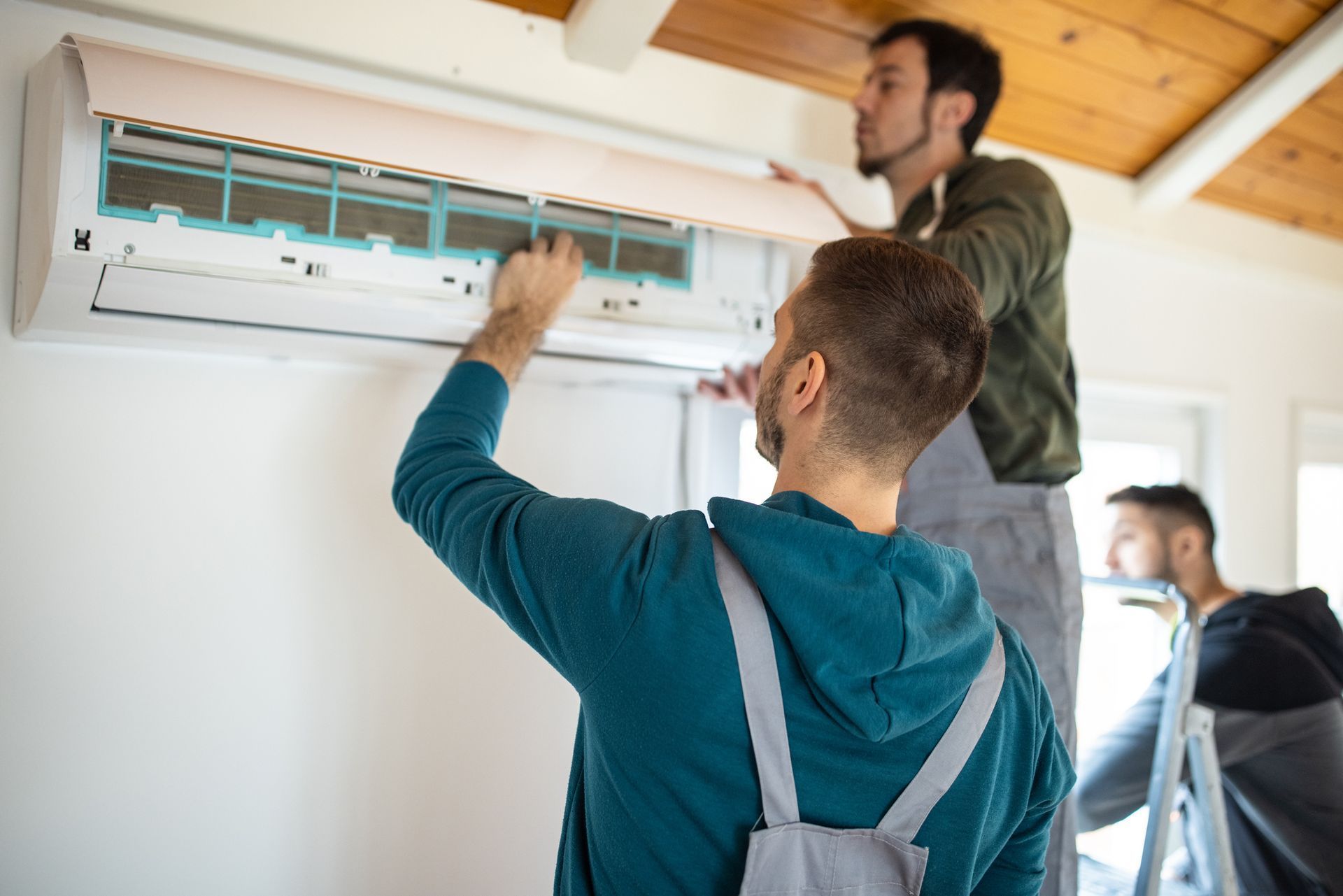
We provide business insurance designed for HVAC contractors. These policies protect your crew, vehicles, and tools while helping you meet project requirements. Every policy is explained clearly and delivered quickly so you can work without delays.

Resources
Insurance Tips for HVAC Contractors
Our blog is built for contractors who want fast answers. Each article covers common questions and risks in under five minutes of reading.


Frequently Asked Question
Common HVAC Contractor Insurance Questions
These FAQs address common contractor questions. As HVACInsure grows, we will update this section with real client experiences and answers.
Why should an HVAC contractor use HVACInsure instead of a general agency?
Specialists understand jobsite requirements, certificate wording, and common endorsements for HVAC work. You get cleaner paperwork, faster approvals, and coverage that fits how your crews operate.
This reduces delays at the gate, avoids gaps, and helps you pass compliance checks the first time.
How fast can I get a Certificate of Insurance (COI)?
Most standard COIs are issued the same business day after binding or updates. If you need additional insured, primary/non-contributory, or waiver language, we prepare it correctly the first time.
Our goal is simple: get your crew on site without paperwork delays.
What coverages do HVAC contractors usually need?
Core policies include General Liability, Commercial Auto, Workers’ Comp, Property/Tools, Inland Marine, and Umbrella. Many projects require higher limits and specific endorsements.
We align your coverage with contract terms and explain each choice in plain language.
Will my tools and scheduled equipment be covered in vans or on jobsites?
Yes. Inland Marine (tools and equipment) can cover items in transit, stored in vehicles, or staged on site.
High-value items can be scheduled, and limits can match your daily field use to keep work moving.
Can I lower my premium without weakening protection?
Often, yes. Clean driver lists, accurate payrolls, safety programs, and bundling policies can help.
We review your profile, request carrier credits, and adjust limits and deductibles to control cost while meeting project requirements.
What should I do after a loss?
Contact us right away so we can file with the correct carrier and set expectations. We guide documentation, next steps, and follow-ups until closure.
Fast reporting and clear records help resolve claims sooner and keep your team focused on work.

Still have questions?
Can’t find the answer you’re looking for? Please chat to our friendly team!
Contact Us